
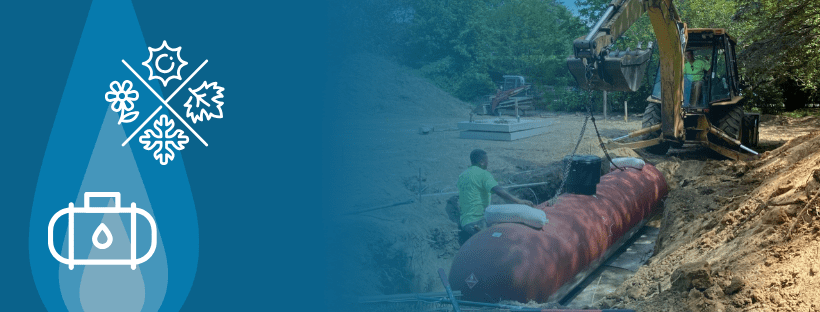
You were hoping never to see the ground in your backyard ripped up again.
But now you need to switch propane providers.
That means a new underground tank.
The thought of digging up your yard, managing permits, and coordinating with installation teams might make you dread the whole process.
While there’s no way around the messy process, you can save yourself some hardship by scheduling your installation at the right time.
What You Need to Know About Underground Tank Installation
Why Spring is the Best Time for Installation
Favorable Weather Conditions
Spring, of course, brings mild temperatures and generally stable weather, making it the perfect time for outdoor projects.
The soil is typically soft enough to allow for easier digging, reducing the strain on equipment and minimizing potential damage to your property.
Additionally, the risks associated with heavy rainfall or extreme heat are lower in spring, which can prevent complications during the installation process.
Contractor Availability
In the fall, as temperatures begin to drop, many homeowners in Pennsylvania and Delaware are preparing for the cold by switching providers or installing a new tank.
In the spring, though, providers have much more flexibility in scheduling.
This availability means you can often secure an installation date that’s convenient for you without long wait times, allowing you to stay ahead of the game and avoid any winter delays.
Prepped for Summer Fun and Winter Necessities
Getting your tank installed in spring means you’re ahead of the curve, especially for summer needs like heating your pool or powering an outdoor kitchen.
For homeowners in Bucks and Delaware Counties, an early installation is perfect for ensuring they can enjoy their outdoor spaces as soon as warm weather arrives.
Plus, you’ll be way ahead of the winter as well.
You’ll have your system in place long before the cold northeast winter arrives, giving you the peace of mind that your fuel needs are already taken care of.
The Underground Propane Tank Installation Process
Determine if Buying Your Current Propane Tank is Possible
If you’re switching propane providers, Kauffman Gas can often help streamline the process by attempting to purchase your current tank from your existing provider.
This can save you the hassle of a new installation, allowing you to skip the excavation and site work completely.
By handling the transition for you in this way, we make the whole switch seamless so you can enjoy uninterrupted propane service.
If that isn’t possible or you need a new propane tank, we’ll carry out the installation with as little hassle as possible, ensuring the excavation and backfilling are done in 1 day.
Initial Assessments
Before installation begins, a professional will conduct a detailed assessment to determine the ideal tank size for your home and plan the installation.
They’ll work with you to choose a tank that best meets your household’s propane needs, whether for basic heating or powering multiple amenities like a pool heater and outdoor kitchen.
Since properties in Southeastern Pennsylvania vary widely in layout, the assessment will also consider site-specific factors, including accessibility for heavy machinery and ensuring the location allows safe, convenient future access.
This thorough evaluation ensures a smooth installation process and optimizes the tank’s placement for long-term convenience and efficiency.
Permitting and Regulations
Securing the necessary permits is a key step in the process.
Regulations differ across townships and counties in Southeastern Pennsylvania and Delaware.
An experienced contractor will manage these requirements, working with local authorities to ensure full compliance.
A reputable provider saves you time and effort by handling permits and approvals, allowing you to focus on your home while they navigate the specifics of municipal codes and safety standards.
Excavation
Excavation is a crucial step in the installation process. The contractor will dig a trench deep enough to accommodate the propane tank while adhering to local codes.
The depth and dimensions depend on the size of the tank and the specific regulations in your area.
Care is taken to consider the soil type and drainage, ensuring a stable foundation for the tank.

Connecting to the Home
Once the tank is in place, it will be connected to your home’s propane system.
This process includes running the appropriate piping from the tank to your home while adhering to safety measures that require pipes to be a specific distance from your home.
If you’re switching propane providers, then we’ll connect to existing piping.
Backfilling and Site Restoration
After the tank is connected, the next step is backfilling the trench to cover the tank.
This process must be done carefully to avoid damaging the tank and ensure it is properly supported.
The final step involves restoring the site, which may include leveling the ground and redoing any landscaping that was disrupted during excavation.
Get Your Underground Propane Tank Installed
If you’re ready to install an underground propane tank this spring, contact our team of experts for a consultation.
We’re here to help you every step of the way!
When you become a Kauffman Gas customer, you’ll benefit from our high-quality tank installation, tailored to your property’s unique needs—above ground or underground—all for just $499.