
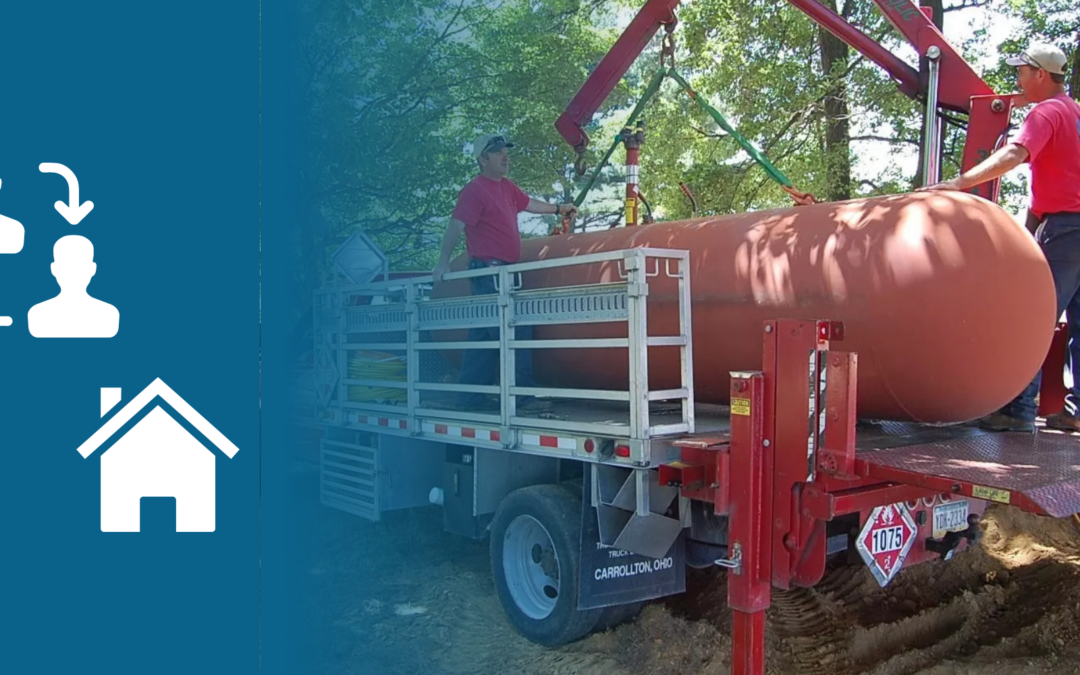
Did you know that the convenience of propane is available without having to have the big white tank in your yard? Many people don’t realize that they can put their propane tank underground!
This can make your landscape look nicer and give you the option of a bigger tank that doesn’t need refilling as often. Read on to find out all about where you can install an underground propane tank.
Underground Propane Tank Checks
The first thing you want to do before considering an underground propane tank is check your local codes. Some communities have different codes about how deep you should bury a tank.
There may also be requirements about the protective measures you add to the tank. Some locations will have specific codes about the distance from the house or the road.
Where to Put a Propane Tank Underground?
Checking your local codes will help you realize that an underground tank cannot just be placed anywhere. The general rule for many places is the tank has to be ten feet from the house and ten feet from the road.
You will also not be able to place the tank near where cars could drive over it. The tank should not be near a driveway or anywhere where someone could accidentally drive a vehicle over it.
Walking your property with a propane professional is a good first step. He will help you find out the perfect area for your underground tank. Then you can check to make sure that electric lines aren’t running through the area.
Take into consideration the septic system or sewer lines coming from and to your house. You don’t want to pick a spot and start digging and hit one of those.
Propane Tank Installation
When thinking of how to install a propane tank, you want to remember that underground tanks are very different from above-ground tanks. They have special fittings that are on a different part of the tank.
They are also constructed with other special features making them better for underground service. This is why it is illegal to bury an above-ground propane tank.
Is It Safe?
Underground propane tanks are generally safer than above-ground propane tanks. The dirt around the tank can act as a natural insulator for the tank. This keeps the tank from having major temperature fluctuations.
When the temperature fluctuates, the gas will expand and contract. This means in the summer months the gas would expand more. With an underground tank, more gas can be put in because the fluctuations will be less severe.
Underground propane tanks are very strong, but if one develops a leak, there is less chance of a fire. There isn’t anything around the tank to give it a spark so fires are unlikely.
Propane also does not affect your water or soil, so you are safe with it being underground.
Electrical Protection
There is a natural electric current that flows in water and land. This current can hurt the metal. Electrolysis is the name for the negative effect and it can cause a small hole to form in metal objects.
Underground propane tanks can develop this so they have to have protection. This protection comes from a special bag called a sacrificial anode bag. This bag absorbs currents that come near the tank so they don’t affect the tank.
The Types of Fill Dirt
The type of dirt you have to bury your tank in is very important. If you have rocky soil, you will want to get special fill dirt for your tank. The fill dirt must be free from rocks so there isn’t an accidental puncture of the tank.
You can also get a mixture of dirt and sand to fill in around the tank. You want to avoid any type of gravel or rocky material for your tank’s protection.
Floating Protection
If water fills up the hole where the tank is buried, the tank could float up if not installed correctly. This is something you don’t want to see one day when you come home!
Your installer should be able to stop this by taking some extra precautions. FEMA recommends securing the tank with ground anchors and straps. Some codes require anchoring the tank to a cement pad.
Some installers will place wet cement in the hole just before the tank is installed. The cement will harden around the feet of the tank and anchor it down.
Talk to your local propane professional about their installation and what they do to protect your tank from floating up. You can also ask them if there are any specific codes your neighborhood has in place.
Propane Tank Maintenance
The propane tank will be buried and out of sight, but there will be some valves and other attachments sticking out of the soil. This gives your propane professional a way to fill the tank and check on its condition.
To protect these attachments a cover is often placed over them. This cover is normally green and can blend into the yard. Many times the homeowner will add yard decorations or plants around the cover to help it blend in.
If you lease your tank, the maintenance and care of the tank itself is the propane company’s responsibility. This takes the responsibility off of you and helps to make sure your tank is in top shape.
The Benefit of an Underground Propane Tank
Putting your propane tank underground can allow you to place a bigger tank for your needs. It will look nicer because you won’t have a tank sticking out on your property plus, you can fill the tank with more propane.
Kauffman Gas is a family-owned and operated business that has been serving customers for 75 years. Contact them and let them help you look at your options of installing a propane tank underground.