
What You’ll Learn
Why does my propane gauge drop in cold weather?
Your propane gauge drops in cold weather because cold liquid propane vaporizes at a slower rate.
With less vapor, the pressure goes down, and the gauge looks low even though the liquid volume hasn’t changed.
In this blog:
This blog was updated April 2026.
Your tank was at 80% yesterday when it was warm outside.
Now with a chill in the air, it’s hovering around 60%.
There is no way you’ve used that much heat overnight, so what happened?
Don’t fret, your propane didn’t vanish into thin air, and your furnace will continue to work just fine.
Let’s run through why this gauge drop happened and why it is not as concerning as it seems.
How Cold Temperatures Affect Propane Tanks
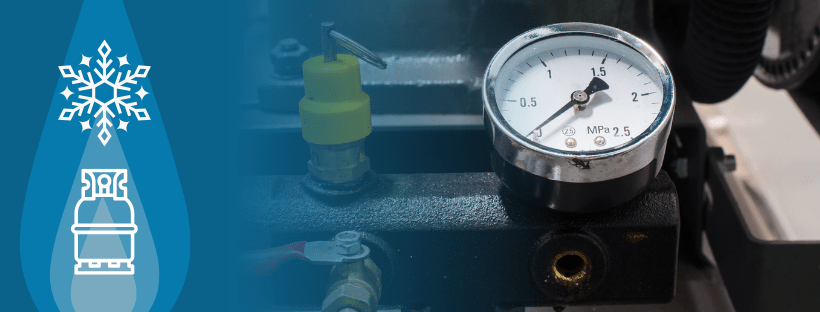
Your propane tank gauge measures the pressure inside your tank, not the liquid volume, and your home is powered by the vaporized propane, not the liquid propane.
When the temperature suddenly drops, your propane vaporization slows, and your tank pressure decreases along with it.
This is normal, expected, and not a sign that your home is about to run out of propane.
So the reading you see is not always a reflection of how much propane is actually in the tank. It’s simply telling you how much vapor pressure is available at that moment.
This pressure change is NOT a sign of:
- A leak
- Heavy usage
- System failure
Why Propane Tanks Are Never Filled to 100%
As a reminder, your tank will never be filled to 100%.
Industry-wide safety standards require that tanks be filled to about 80% so there’s space for the propane to expand safely when warmed.
Specifically, propane vaporizes as it warms. When you go from a liquid state of matter to a gaseous state of matter, the liquid substance (propane) expands.
A tank filled all the way to the top would have no room for this expansion, which could cause a number of problems, including dangerous pressure buildup.
The 80% rule isn’t about the weather day to day. It’s a built-in safety margin that applies year-round, on every tank, everywhere.
A Tip to Reduce Winter Gauge Panic
You don’t need extra services or expensive upgrades.
One simple habit can save you stress and prevent unnecessary emergency calls.
Make sure to check your gauge midday instead of early morning, when cold temperatures can make the pressure read lower than it really is.
This will give your tank the best shot at an accurate reading and help you keep track of your fuel usage more reliably.

Appliance Performance and Propane Use
How your appliances operate can affect fuel levels. Dirty burners, blocked vents, or inefficient furnaces require more propane to maintain heat.
To prevent issues:
- Schedule tank maintenance every three years.
- Service your furnace annually, as well as other propane appliances like stoves or water heaters.
- Keep vents and exhaust paths clear.
- Check for drafts or insulation issues that make your home harder to heat.
Ignore Your Gauge—Sign Up for Automatic Delivery
You don’t have to rely on pressure-based readings at all.
For Southeastern Pennsylvania customers who want a little extra peace of mind, we offer an optional automatic-delivery service that predicts when your tank will need a refill based on your usage history, tank size, weather, and other factors.
We schedule deliveries before the tank runs low, avoiding any surprises.
You get consistent, reliable heating even through the coldest stretches of winter.
Even during the coldest snaps, when gut instinct tells you to “call now!” we’ve already got you covered.
No surprises. No scrambling. Just steady fuel, even when frost bites outside.
Become a Kauffman Gas customer today!
FAQs
Why does my propane gauge show low even if the tank is nearly full?
Cold temperatures slow the rate at which propane vaporizes.
The gauge measures pressure, not liquid volume, so a drop in pressure makes the tank appear low even when there’s still fuel available.
Understanding this prevents unnecessary worry and emergency service calls.
Does cold weather consume more propane?
No. Cold temperatures don’t increase propane usage.
They reduce vaporization, which lowers pressure readings on your gauge, but the liquid fuel inside remains mostly unchanged.
Your heating system still consumes propane at the normal rate.
Why isn’t my tank filled to 100%?
Because propane expands as it warms.
Filling your tank to 100% would leave no room for this expansion and could create excessive pressure.
The 80% is an industry-wide safety rule that protects the tank, the system, and your home.
When should I schedule a propane refill in winter?
Schedule a refill when your gauge drops to about 30–40%, or in advance of extended cold snaps.
Early scheduling accounts for delivery routing and weather delays and ensures continuous heat during peak demand.