
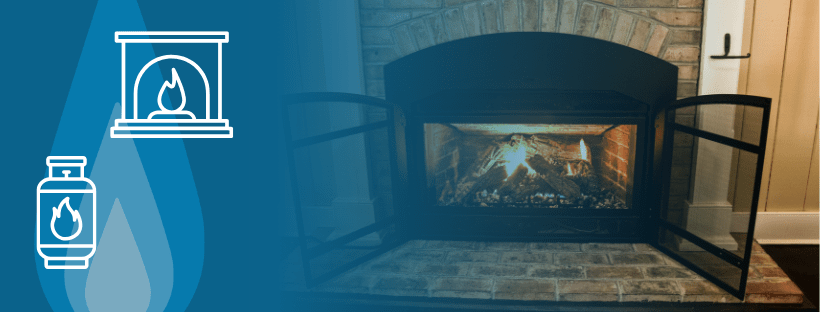
Despite several years of milder than normal winters, your Pennsylvania or Delaware homes should still be cold weather ready.
You should take some care in deciding what kind of home heating method you choose. While wood-burning stoves feature prominently in TV shows and films set during the winter, they aren’t always the most practical option.
Intense regulations can make owning and using wood fireplaces difficult in many areas. The use of fire also comes with many safety and pollution drawbacks. It is because of these concerns that many are now considering propane fireplaces as a heating alternative.
If you’re thinking of making the switch, here are five benefits of propane fireplaces.
1. Cleaner Than Wood
Historically, many people burned wood as a heat source because it was cheap and readily available. Unfortunately, fireplaces are also a very dirty form of heat. Burning wood, especially at lower temperatures, produces a lot of particulate matter.
This particulate matter and the gases released by burning wood are toxic. They also contribute to air pollution.
This proves especially troublesome in areas that already suffer from poor air quality. Add in the smoke from hundreds or thousands of individual stove fires and it reduces air quality to unacceptable levels.
Simply put, propane burns cleaner. If you’re looking for ways you can limit your environmental impact, propane offers you a more environmentally-friendly heat source.
2. Fewer Restrictions
Beginning in the late 1980s, the EPA began developing regulations that govern the design of new wood-burning stoves.
One of the key goals of these new regulations was the reduction of emissions from these stoves. Yet, despite the initial efforts, the EPA keeps tightening the restrictions on wood-burning stoves.
On top of that, many cities and states now maintain regulations on the books regarding wood stoves themselves or using wood stoves.
For example, some states will issue day-long bans on any wood-burning stove, indoor or outdoor to protect air quality. While these bans may protect air quality, they can make life uncomfortable on cold days.
In Oregon, you must entirely remove any wood-burning stoves that do not meet certification standards from your home before you can sell the house.
Since propane stoves are already so much cleaner than their wood-burning counterparts, there are few if any limitations on when you can use them.
The only regulations you’re likely to run across are the ones that apply to the proper installation of the propane supply.
Pro tip: you’ll want that supply installed by a propane supply company or by a master plumber for interior work.
3. Options for Different Homes
Different homes bring different needs and challenges. If you own your own house, for example, you need a primary or secondary heat source that is sized for your space. The upside is that you can get a propane stove installed almost anywhere in the house.
Of course, it gets trickier depending on the setup of your home. If wood has been your primary heat source and you used an open fireplace in your living room, odds are good you don’t have a space set aside in your house where a new stove can go.
But there is a solution. You can get a propane stove insert that will slide into your existing fireplace. You can even use your existing chimney for venting the stove.
What if your home doesn’t have an existing stove and convenient chimney for venting. it’s not a problem because you can get a vent-free propane stove that doesn’t need the chimney. Many of these models are free-standing, which lets you position them against nearly any wall.
4. Safety and Reliability
While often lovely to look at, fire is also a potentially dangerous thing. This proves even more true with open fireplaces.
Even if you operate a closed stove and stay after it, there is always the risk of creosote buildup in your chimney. Under the right conditions, creosote will catch fire. This can damage your chimney or even pose a fire risk for your home.
A propane fireplace doesn’t typically pose these kinds of dangers. There is no wood, so you won’t get lose embers. While propane can cause creosote, it happens in substantially smaller amounts.
Unlike a wood stove, propane stoves generally deliver reliable heat as long as your propane gas doesn’t run out. No more worrying about whether the fire will last until morning. If the temperature drops too much, the thermostat will turn on the fireplace.
5. Propane Fireplaces Offer More Convenience
One of the biggest day-to-day drawbacks of wood fireplaces is the mess involved. You must bring wood into the house, which inevitably means wood chips, splinters, and bits of bark. That means constant sweeping if you want a debris-free floor.
You must also periodically clean out the leftover ashes in the stove and dispose of them safely. Make sure those coals are good and cold before you put them into a trash bag or trash receptacle. You’ll also need professional chimney cleaning services as well.
While gas stoves need occasional cleaning, it’s a mere shadow of the maintenance involved with a wood stove.
Is a Propane Fireplace Right for You?
Deciding between propane fireplaces and other alternatives depends at least partially on your home. If your home has an open fireplace and chimney, it makes installation faster and easier.
It also depends on your local regulations. If your city or town has started cracking down on burning wood, you may find it’s simply more practical to switch to something less regulated.
If you’re ready to make the switch but need propane service, contact Kauffman Gas today for more information.
