
What You’ll Learn
Should you choose a propane stove or an induction cooktop for your home?
If you already use propane, a gas stove offers precision, professional-level control, and requires minimal installation effort.
Induction cooktops offer quick heating and energy efficiency, but come with compatibility and power requirements.
In this post:
- How Each Type of Stove Works
- Cooking Precision and Control: Why Chefs Still Prefer Gas
- Heat Speed and Energy Efficiency: Induction’s Strong Suit
- Cooking Feel and Everyday Use
- Installation Considerations for PA Homes
- Long-Term Value and Operating Costs
- Safety and Maintenance
- The Bottom Line: What’s Best for Your Pennsylvania Kitchen?
You’re ready to rip out your stove.
It’s an old standard electric stove that burns your eggs on some days and leaves them runny on others.
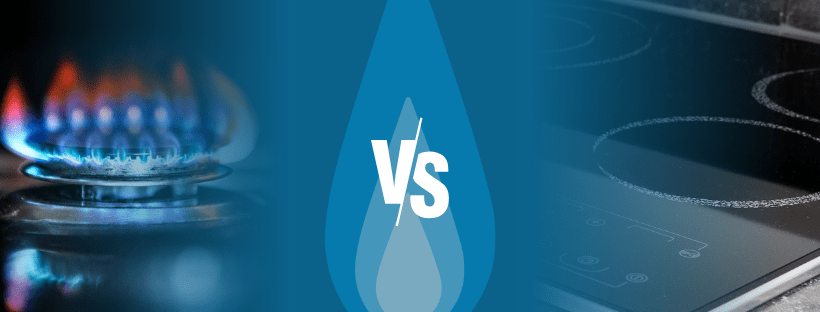
Now, you’re debating between a classic propane gas stove and a modern induction stove.
You already use propane for heat, so you wouldn’t have to find a provider or coordinate a tank install, but one of your friends swears by their induction top and fancy pans.
How Each Type of Stove Works
Before comparing performance, it helps to know how these systems create heat.
- Propane stoves burn gas directly beneath the pot or pan, producing an open flame. That flame gives you instant visual feedback and control—turn the knob, see the flame adjust, and immediately feel the temperature change.
- Induction cooktops, on the other hand, use electromagnetism. The cooktop surface itself doesn’t get hot; instead, it transfers energy directly into the metal of the pan. This method can be very efficient, but it only works with magnetic cookware.
In short: propane gives you visible, responsive heat, while induction gives you invisible, efficient heat—each with its own advantages depending on how you like to cook.

Cooking Precision and Control: Why Chefs Still Prefer Gas
If you’ve ever cooked on propane, you know the difference: when you turn the flame down, your food stops sizzling right away.
That’s instant feedback—something electric and induction systems can only approximate.
Professional chefs across Pennsylvania and beyond still rely on gas for that reason.
Propane offers:
- Visual control: You can see the flame size change in real time.
- Immediate response: Temperature shifts happen instantly when you turn the knob.
- Even heating: Flames spread evenly around the pan base, minimizing hot spots.
- High-heat searing: For wok cooking, charring, and sautéing, propane excels.
For homeowners who love to cook, the tactile experience of adjusting flame and hearing that quick sizzle is a big part of why propane stoves remain a top choice in homes from West Chester to Kennett Square.
Induction offers its own kind of precision, though—it can maintain a steady, exact temperature once it’s set.
This makes it great for simmering sauces, or slow cooking without scorching.
But it lacks that intuitive, visual control that makes propane feel more connected to your cooking process.
Heat Speed and Energy Efficiency: Induction’s Strong Suit
When it comes purely to speed, induction cooktops win the race.
Because induction transfers energy directly into the pan instead of heating the air or burner, it can boil water in about half the time of a propane burner.
It also wastes less energy—around 85–90% of the energy goes into the food, compared to about 60% for propane.
However, that efficiency can be somewhat offset in real homes.
Many Pennsylvania homes—especially in rural areas like Honey Brook, Landenberg, or Chester Springs—still have limited electric service capacity.
If your kitchen wiring can’t handle a high-powered 240V induction unit, you might need an electrical upgrade before installation.
Cooking Feel and Everyday Use
While induction is efficient, it feels different to use.
There’s no flame, no glowing coil, and often no heat indicator once you lift the pan—making it a more sterile experience for some cooks.
Propane cooking feels alive.
You can roast peppers directly over the flame, use specialty pans, or keep the burner on low to toast tortillas.
And since propane doesn’t rely on special cookware, you can keep using your favorite cast-iron skillet or copper pot.
Induction requires ferrous (magnetic) cookware, meaning aluminum, glass, cast-iron, enamel-coated cast-iron, and most copper pans won’t work unless they have a steel core.
If you love your current set of cookware, you’ll need to check compatibility.
Installation Considerations for PA Homes
The decision between propane and induction often comes down to how your home is set up.
If You Already Use Propane
For homeowners in Coatesville, Downingtown, or Chadds Ford, switching to a propane stove is often straightforward:
- A certified technician can connect your stove to your existing propane line.
- You’ll maintain energy independence during power outages—since propane keeps working when the grid goes down.
It’s a particularly smart upgrade if you already rely on propane for heating or water heating—you already have the tank.
If You’re Considering Induction
- A dedicated 240V electrical circuit, often 40–50 amps.
- Proper kitchen wiring and an outlet that matches the stove’s specs.
- Cookware that’s induction-compatible.
If you’re remodeling your entire kitchen, those costs may blend into the project, but for a simple appliance swap, propane is usually faster and more affordable to install.
Long-Term Value and Operating Costs
Propane: Reliable, Stable, and Versatile
Propane remains one of the most versatile fuels for Pennsylvania homeowners.
Beyond the kitchen, it powers heating systems, fireplaces, clothes dryers, generators, and outdoor grills—all from the same tank. That flexibility adds long-term value and energy independence.
With propane, you’re also not fully reliant on the electric grid, which can be a major advantage during winter storms and outages—common across Chester County and northern Delaware.
Induction: Efficient but Dependent
Induction cooktops can reduce daily energy costs slightly due to their efficiency.
However, their savings depend on local electric rates and how often you cook. Electricity prices in parts of Pennsylvania and Delaware have climbed in recent years, narrowing the difference in operating costs.
If you use propane for other home systems, it often makes financial sense to keep everything on the same energy source for convenience, efficiency, and service consistency.
Safety and Maintenance
Both propane and induction stoves are safe when installed correctly.
- Propane systems require proper ventilation, periodic line inspection, and use of modern appliances with built-in safety valves and ignition systems.
- Induction cooktops stay cool to the touch (outside of residual pan heat) and automatically shut off when cookware is removed.
In daily use, propane stoves are easy to maintain—just wipe the grates and burners. Induction cooktops are easier to clean (flat glass surface), but they can scratch or crack if heavy cookware is dropped.
The Bottom Line: What’s Best for Your Pennsylvania Kitchen?
If you love to cook and already use propane, a gas stove remains the most natural fit.
You’ll get:
- Instant, visible heat control
- Fast installation
- Continued cooking power during outages
- Compatibility with your favorite cookware
An induction cooktop can be a smart choice if your kitchen already supports high-voltage electrical connections, and you’re focused on:
- Efficiency
- Low-heat output
- Sleek design
- A nice excuse to get rid of any old, crappy cookware
If Propane is Right for You, Kauffman Has Your Back
If you’re planning a new propane stove installation, the experts at Kauffman Gas are here to help.
We’ll handle your installation safely, ensure your system is properly connected, and help you choose the right stove for your cooking style and budget.
Contact Kauffman Gas today to schedule your installation or ask any questions about adding a propane stove to your home.
FAQs
Can you safely use a propane stove indoors?
Yes—propane stoves are completely safe indoors when installed by a certified technician.
Proper ventilation and modern safety features like electronic ignition and flame sensors make indoor propane cooking safe, efficient, and reliable for Pennsylvania homeowners.
Is propane cheaper than electricity for cooking in PA?
In many parts of Pennsylvania, propane costs less per BTU than electricity—especially in rural areas like Honey Brook, Landenberg, and Chester Springs, where electric rates can be higher.
Plus, propane offers reliable cooking even during power outages, adding to its long-term value.
Do induction cooktops work with all cookware?
No. Induction cooktops only work with magnetic materials like cast iron or stainless steel.
If a magnet sticks to the bottom of your pan, it will work.
Aluminum, copper, and glass cookware won’t heat properly unless they have a magnetic base.
How much does it cost to install a propane stove in PA?
For most homes that already use propane, installation is quick and affordable—typically between $200 and $500 when connecting to an existing line.
If a new line needs to be added, costs can vary depending on distance and kitchen layout.
Can I switch from an electric or induction stove to propane?
Absolutely. If your home already uses propane for heat or water heating, adding a stove is straightforward.
A licensed propane technician can safely run a gas line to your kitchen and set up your new stove—often in a single visit.