
What You’ll Learn
Do I need a carbon monoxide detector and a propane detector?
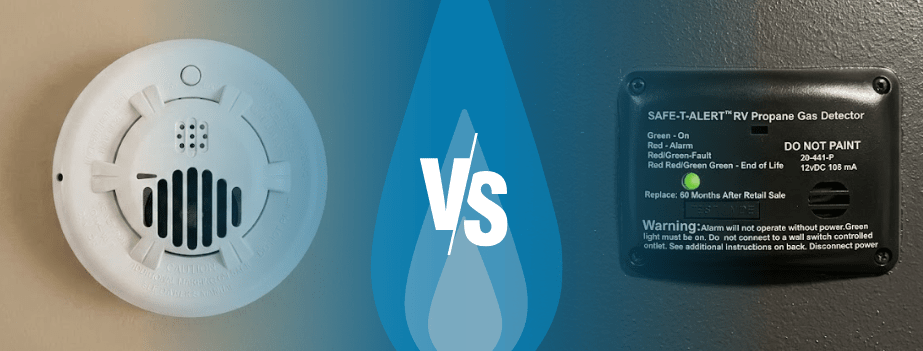
If you have propane heat or other propane appliances, yes. They detect different hazards. Carbon monoxide detectors monitor for carbon monoxide produced by incomplete combustion, while propane detectors monitor for the presence of propane gas. Having both provides two separate layers of protection.
In this blog:
When Mike bought his first propane-heated home, he did one thing he thought would keep his family safe: he installed a carbon monoxide detector.
It was right outside the bedrooms, the batteries were fresh, and he tested it regularly.
He felt covered.
Then, during a routine service visit, a technician asked him a simple question:
“Do you have a propane detector, too?”
Mike didn’t.
Like many homeowners, he assumed his CO detector would alert him to a propane leak.
It wouldn’t.
The two detectors protect against different hazards, and knowing the difference could matter when you’re heating your home with propane.
The Difference Between a Carbon Monoxide and Propane Detector
Carbon Monoxide Detectors Detect CO
Carbon monoxide, or CO, is produced when fuel doesn’t burn completely.
Propane-burning appliances—including furnaces, water heaters, fireplaces, and other equipment—can produce carbon monoxide if they’re not operating or venting properly.
The concern is that carbon monoxide is colorless and odorless. You can’t see it, and you can’t rely on your senses to tell you it’s present.
That’s why a CO detector is so important in a home with fuel-burning appliances.

Propane Detectors Detect Propane Gas (Liquefied Petroleum)
A propane detector is designed to detect propane gas itself.
Propane is intentionally odorized so that leaks can often be detected by smell. However, relying on odor alone isn’t a substitute for a properly installed detector.
Propane is also heavier than air, which means leaking propane can settle in low areas rather than immediately dispersing throughout a room.
That’s an important difference when you’re thinking about detector placement.
Why a Propane-Heated Home Needs Both
Think of these detectors as two separate layers of protection.
A propane detector can alert you to the presence of propane gas. In contrast, a carbon monoxide detector can alert you to a potentially dangerous buildup of carbon monoxide from incomplete combustion.
The hazards can come from different problems.
For example, a propane leak can occur somewhere in the fuel system even when an appliance isn’t operating.
Carbon monoxide, meanwhile, is associated with the combustion process. Problems involving an appliance, combustion, or venting can create conditions where CO becomes a concern.
Having one detector doesn’t eliminate the need for the other.
The Added Cost of a Propane Detector
We know the last thing you want is another home expense, but a propane detector is a relatively small investment in another layer of protection.
A typical propane detector costs around $40 to $80, depending on the model and features. You can opt for smart or Wi-Fi-enabled features if you want them, but a basic propane detector can provide the same essential detection.
There are also combination CO and propane detectors available. These can make sense in smaller homes or manufactured homes where both hazards can be appropriately detected from the same location. For larger homes, separate detectors may allow for better placement based on the different characteristics of each hazard.
Where to Install Each Detector
Having the right detectors is important. Putting them in the right places is just as important.
Always follow the installation instructions provided by the detector manufacturer, because placement requirements can vary by model.
Where to Install Carbon Monoxide Detectors
CO detectors should generally be installed:
- Near sleeping areas
- Outside bedrooms or other sleeping areas
- On each level of the home
- In locations recommended by the manufacturer
The goal is to make sure occupants can hear an alarm, particularly while sleeping.
Because CO mixes with the air, its detector placement is different from the placement considerations for propane gas.
Don’t assume that putting one CO detector next to the furnace is enough to protect the entire house.
Where to Install Propane Detectors
Propane detector placement requires a different approach.
Because propane is heavier than air, leaking gas can collect closer to the floor. Detectors designed to detect propane therefore need to be installed according to the manufacturer’s instructions for detecting a heavier-than-air gas.
Appropriate locations may include areas near propane appliances or other locations where a propane leak could occur, depending on the detector’s design and the manufacturer’s requirements.
Basements and other low areas may also require special consideration.
Don’t simply mount a propane detector wherever it’s convenient.
The detector needs to be installed at the location and height specified by the manufacturer for the type of gas it is designed to detect.
Common Detector Mistakes Homeowners Make
Most detector problems aren’t because homeowners don’t care about safety.
They’re usually the result of simple assumptions.
Installing a Propane Detector Too High
Because propane is heavier than air, placement matters.
A detector designed for propane needs to be installed according to its manufacturer’s instructions, including the appropriate height.
Putting Detectors Where They’re Obstructed
Don’t hide a detector behind furniture, curtains, or other objects that could interfere with its operation or the ability to hear its alarm.
Ignoring Low-Battery Warnings
That occasional chirp can be annoying.
It’s also trying to tell you something.
Replace batteries according to the manufacturer’s instructions, and don’t remove them simply to stop the noise.
Keeping Expired Detectors in Service
Detectors don’t necessarily last forever.
Check the manufacturer’s recommended service life and replace the unit when it reaches the end of that period.
Not Paying Attention to Fault Indicators
Some detectors provide different sounds or indicators for low batteries, malfunctions, or end-of-life conditions.
If you’re unsure what a particular chirp or warning means, check the manufacturer’s instructions.
Don’t silence an unfamiliar warning without finding out why it’s happening.
Detectors Are a Safety Net, Not a Substitute for Maintenance
A detector provides an important warning if it detects the hazard it’s designed to monitor.
But it can’t prevent the conditions that cause those hazards.
That’s why detectors should be part of a larger propane safety strategy that includes professional maintenance and proper appliance care.
For example, professional furnace maintenance can include evaluating the equipment’s operation and combustion, while technicians can also identify issues that may affect safe and efficient operation.
Your home’s propane system also deserves regular attention.
The detector is there to tell you something may be wrong. Maintenance helps make sure your equipment is operating properly in the first place.
Protect Your Home With More Than a Detector
Detectors provide an important layer of protection, but they shouldn’t be your home’s only line of defense.
Regular professional maintenance helps identify problems before they become an emergency. Kauffman Gas technicians can inspect your propane equipment, evaluate furnace operation, check combustion and venting, and look for issues that could affect the safe and efficient operation of your system.
If you rely on propane to heat your home, don’t wait for a detector to tell you something is wrong.
Contact Kauffman Gas to schedule your professional propane and furnace maintenance.
FAQs
Does a carbon monoxide detector detect propane?
No. A standard carbon monoxide detector is designed to detect carbon monoxide, not propane gas. If you want protection against both hazards, you’ll need detectors designed for each one.
Where should I install a propane detector?
Follow the manufacturer’s specific installation instructions. Because propane is heavier than air, detector placement is different from CO detector placement. It may involve positioning the detector closer to the floor or in other locations specified by the manufacturer.
Where should I install carbon monoxide detectors?
CO detectors should generally be installed near sleeping areas and on each level of the home, following the manufacturer’s instructions and applicable safety recommendations. The goal is to ensure the alarm can be heard by occupants, including while they’re sleeping.
How often should I replace my detectors?
Detectors have a limited service life. Check the manufacturer’s instructions for the expected lifespan of your specific model and replace the detector when it reaches the end of that period.
What should I do if I smell propane?
Treat the smell of propane seriously. Avoid creating sparks or flames, leave the area if necessary, and follow your propane supplier’s emergency instructions. Do not rely on a detector—or the absence of an alarm—to determine whether a suspected propane leak is safe.