Preventive maintenance is critical for the life expectancy of your propane water heater. Maintenance helps you find minor problems before they become large, expensive repairs.
You have an advantage with a propane water heater. A traditional water heater tank or a tankless model is an asset for your home.
Propane water heaters are more efficient than electric models. They have lower operating costs. Propane is a reliable source of clean energy.
Learn more about propane water heaters and the maintenance to keep your water heater working its best.
Tank vs. Tankless Propane Water Heaters
Many propane water heaters have a conventional storage tank for the water. A growing number of propane water heaters are tankless, though. Each type of propane water heater has its own preventive maintenance process.
Understanding how your propane water heater works is the first step in properly maintaining it.
How Does a Tank-Type Water Heater Work?
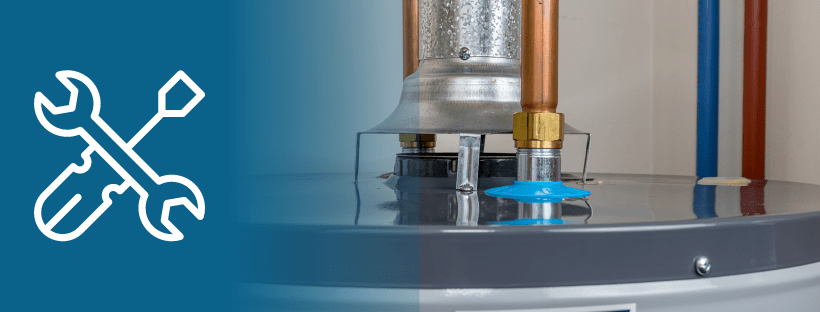
Tank-type water heaters hold the warm water in a large internal container. A propane burner below the tank heats the cold water inside. The warm water rises to the top of the tank.
A hot water discharge pipe provides hot water wherever you need it.
A thermostat measures the temperature of the water in the tank. The propane burner turns on and off to maintain the temperature you want inside the tank.
How Does a Tankless Water Heater Work?
Tankless water heaters are also called on-demand water heaters. They make hot water only when you need it.
When someone turns on a hot water faucet, cold water flows through the heat exchanger in the water heater. A propane burner heats the water. The burner turns off when you’re finished using the hot water.
Tank-Type Propane Water Heater Maintenance
The same basic maintenance tips apply to propane and electric water heaters. A properly-maintained propane water heater can last up to 15 years. Always check the manufacturer’s recommendations before performing maintenance on your water heater.
Check the Water Temperature
A thermostat measures the water temperature inside the storage tank. This tells the burner to turn on and off to maintain the right temperature. Problems with the thermostat can make your water heater less efficient.
Check the temperature of the water that comes out of your faucets. It should match the temperature setting on the water heater thermometer. If not, you need a repair professional to diagnose the problem.
Test the Pressure Relief Valve
The temperature and pressure relief (T&P) valve is an important safety feature. You should test it once a year. If pressure increases inside the tank, water will leak out through the T&P valve to avoid a dangerous build-up.
You can disconnect the pipe from the T&P valve using a wrench. Partially lift the lever on the valve. It should slowly release water, air, and steam.
When you release the valve, water should stop flowing. You need a new valve if water keeps flowing after you close it.
Flush Sediment Out of the Tank
Sediment in the tank is one of the leading causes of water heater problems. It can cause clogs and make the water heater work less efficiently.
You need to drain the tank before you can flush out any sediment. First, turn off the supply of water and gas. You’ll need to let the water cool down before draining it.
After the water heater cools down, attach one end of a hose to the drain valve. You can put the other end of the hose into a floor drain or outside. Turn on the hot water tap to release pressure and open the drain valve.
You can turn the water back on and flush the tank. After the water runs clear, you can return everything to the standard settings and refill the tank.
Check the Anode Rod
Water heaters have an anode rod that prevents the tank from rusting—the anode rod rusts, so the tank doesn’t corrode. If the anode rod completely rusts, the tank will be next.
You can unscrew the rod on top of the water heater. You need a new one if the rod is covered with calcium or is less than 1/2 inch thick.
Tankless Propane Water Heater Maintenance
Maintenance for an indoor propane tankless water heater is more straightforward than for a tank-style water heater. Regular maintenance is still essential, though. It helps maximize the performance and lifespan of your water heater.
Check the Water Line Filter
Many tankless water heaters have a water line filter. This filter helps prevent contaminants from entering the water heater and your plumbing system.
Some filters can be cleaned and reused. Other filters need replacement. Your user manual will specify which type of filter you have.
Clean the Air Filter
Some tankless water heaters have an air filter between the air intake pipe and the fan. Contaminants can clog the filter and reduce the airflow.
You can remove the filter and rinse it to clean it. After drying it off, you can put it back into the water heater.
Flush the System
Contaminants and mineral build-up can reduce the efficiency of your tankless propane water heater. You can remove it by flushing the system.
First, turn off the gas supply and close the water valves. Connect hoses to the hot and cold purge ports. Use a submersible pump to push a vinegar mixture or descaling solution through the heater.
Run the cleaning solution through the system for 45 to 60 minutes. Then flush the system with clean water and return everything to its usual settings.
Get Help with Your Propane Water Heater Maintenance
Maintaining your propane water heater is essential. Maintenance keeps your system working efficiently. Preventive care helps extend the service life of your water heater.
If the maintenance to-do list seems intimidating, you can find help. Kauffman Gas does more than deliver propane for your appliance needs. We can also provide propane water heater maintenance.
Kauffman Gas serves Chester County, Lancaster County, Delaware County, and Northern Delaware. Contact us today to schedule your water heater maintenance.
