
What You’ll Learn
Why won’t my furnace start after summer?
Your air conditioner could be the reason. If your furnace shares a condensate drain with your air conditioner, algae, mold, and debris can build up during the cooling season.
By fall, that blockage may trigger safety switches that prevent the furnace from starting until the drain is cleared.
In this blog:
Remember how E.T. could feel everything Elliott felt?
Your air conditioner and furnace have a similar relationship. Well, sans the psychic telepathy.
Your AC and Furnace are separate pieces of equipment, but they’re more connected than most homeowners realize.
All summer long, while the furnace sits idle, the air conditioner is using the same condensate drain the furnace will rely on when winter arrives.
If that drain slowly clogs with algae and slime, the furnace pays the price months later.
That’s why a problem that starts in July often doesn’t show up until the first cold morning in November.

Why Your Furnace Has a Drain in the First Place
Many homeowners are surprised to learn that high-efficiency furnaces produce water.
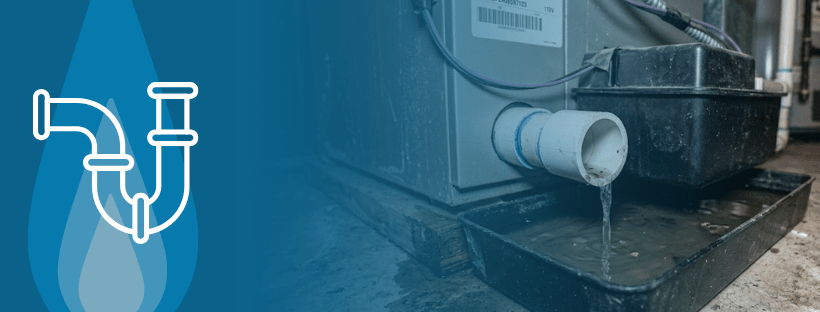
Unlike older furnaces, high-efficiency models extract so much heat from combustion that water vapor condenses into liquid. That condensation drains away through a PVC condensate line.
In many Pennsylvania homes, that drain line is also connected to the central air conditioning system.
That means it’s used during both heating and cooling seasons.
Even though the furnace isn’t heating your home during the summer, part of it is still being used.
As your air conditioner cools warm, humid air, moisture collects on the evaporator coil and drains through the same condensate system.
On a humid Pennsylvania summer day, that can mean several gallons of water moving through the drain line every day.
Constant moisture creates the perfect environment for:
- Algae
- Mold
- Slime
- Dirt and dust
- Biofilm buildup
Because the drain is hidden, homeowners rarely notice anything happening.
The blockage slowly grows all summer long.
Warning Signs Your Condensate Drain May Be Clogged
Drain clogs don’t always appear overnight.
Often there are subtle warning signs first.
They also inspect the condensate system by:
- Checking the drain line for blockages
- Flushing accumulated algae and debris
- Inspecting drain traps
- Testing the condensate pump (if equipped)
- Verifying proper drainage
- Confirming safety switches operate correctly
These small maintenance tasks often prevent the first no-heat emergency of the season.
Why a Drain Clog Can Cause Multiple Problems
When heating season returns, the furnace begins producing condensate again.
If the drain is partially or completely clogged, that water has nowhere to go.
Modern high-efficiency furnaces include condensate overflow safety switches designed to prevent water damage.
If the switch detects backed-up water, it may shut the furnace down before it can complete a heating cycle.
From the homeowner’s perspective, it feels like the furnace suddenly failed after being off all Summer.
In reality, it’s doing exactly what it was designed to do: protect itself from water damage.
A blocked condensate drain doesn’t just affect startup.
If left unresolved, it can also:
- Trigger repeated furnace shutdowns
- Damage condensate pumps
- Allow water to back up into the furnace cabinet
- Increase corrosion on internal components
- Lead to expensive service calls during the busiest part of winter
What starts as algae in a condensate drain line can eventually affect your furnace’s ability to run.
On a high-efficiency furnace, that drain is part of the safety system. If it can’t remove water properly, the furnace may refuse to operate until the problem is corrected.
Annual Maintenance Prevents Winter Surprises
One of the simplest ways to prevent condensate problems is through annual furnace maintenance.
During a professional tune-up, technicians don’t just inspect burners and ignition components.
They also inspect the condensate system by:
- Checking the drain line for blockages
- Flushing accumulated algae and debris
- Inspecting drain traps
- Testing the condensate pump (if equipped)
- Verifying proper drainage
- Confirming safety switches operate correctly
These small maintenance tasks often prevent the first no-heat emergency of the season.
Don’t Wait Until the First Cold Morning
A clogged condensate drain doesn’t happen overnight.
It develops gradually throughout the cooling season, when your air conditioner quietly sends moisture through the same drainage system your furnace will rely on months later.
By the time the temperatures drop, what was a minor maintenance issue can become the reason your furnace won’t start.
The good news is it’s also one of the easiest problems to prevent with annual maintenance.
Contact Kauffman Gas Before Heating Season Begins
A professional furnace tune-up includes more than checking the burners.
Our technicians inspect and clean the condensate drainage system, verify safety controls, and make sure your high-efficiency furnace is ready before the first cold snap arrives.
Contact Kauffman Gas today to schedule your annual furnace maintenance and help prevent an unexpected winter no-heat emergency.
FAQs
Do all furnaces have a condensate drain?
No. Condensate drains are found primarily on high-efficiency condensing furnaces, which produce water as they extract more heat from combustion. Older, standard-efficiency furnaces typically do not have this type of drainage system.
Why does my air conditioner affect my furnace drain?
In many homes, the central air conditioner and high-efficiency furnace share the same condensate drain line. Moisture removed by the air conditioner during the summer flows through this line, allowing algae and debris to build up long before heating season begins.
Can I clean a condensate drain myself?
Some homeowners flush accessible drain lines, but complete cleaning often requires inspecting traps, pumps, and safety switches. If the drain is repeatedly clogging or your furnace won’t start, it’s best to have the system professionally serviced.
What causes algae to grow inside the drain?
Warm temperatures, constant moisture, dust, and organic debris create ideal conditions for algae and slime to develop inside condensate lines during the cooling season.
How often should the condensate drain be cleaned?
The condensate drain should be inspected during annual HVAC maintenance. For homes with heavy air conditioner use or previous clogging issues, technicians may recommend cleaning it more frequently to keep the system draining properly.