
What You’ll Learn
How do I choose and install a propane tank for my home?
Start by deciding between aboveground (easier, cheaper installation) or underground (hidden, protected, space-saving).
Tank size depends on your usage—most homes choose 500 or 1,000 gallons.
The installation itself takes 1-2 days and requires a licensed professional to handle delivery, placement, and connection.
In this blog:
This blog was updated March 2026.
You’ve finally decided to switch to propane. Lower bills, cleaner energy, reliable heat—it all sounds great.
Then reality hits: you need a tank. Where does it go? How big should it be? Above ground or under? And who’s going to install the thing?
The good news? The process is simpler than you think. You just need someone who’s done it a thousand times before.
The Propane Tank Installation Process
The first step in the propane tank installation process is selecting the right tank size for your needs. The tank size will depend on the amount of propane you plan to use and the space you have available for it.
Once you have selected the right size tank, the next step is to have it delivered to your property. The tank will be placed in the location you have selected and connected to your propane system.
The propane tank process typically takes 1 to 2 days and requires a licensed, certified propane professional.
Aboveground vs Underground Tanks
Aboveground and underground tanks each have their own pros and cons. The option that’s best for you depends on your heating needs.
Aboveground Tanks
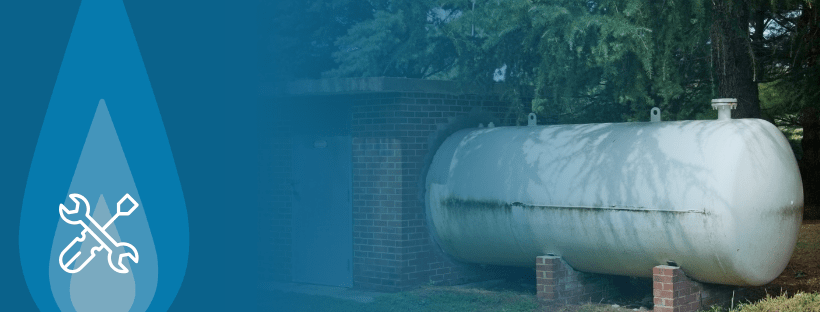
These tanks are the most common type of propane tank and are installed above ground, either on a concrete pad or directly on the ground. Tanks of any size work for above-ground installation.
Aboveground tanks are easy to install and maintain.
They do not require any excavation or trenching, which can save time and money.

They also provide easy access for regular maintenance and monitoring of the tank’s condition. Additionally, aboveground tanks are more visible, making it easier to detect leaks or other issues.
Underground Tanks
These tanks are buried underground and are typically used when aboveground tanks are not feasible or desirable. They are also available in a variety of sizes, but most commonly 500 or 1,000 gallons.
Installing your tank underground means it’s better protected and more visually appealing.
One of the main benefits of underground tanks is that they are not visible, which can be an advantage for those who want to maintain their property’s aesthetic.
They also take up less space than aboveground tanks, making them a great option for properties with limited space.
Another benefit of underground tanks is that they are protected from external elements such as storms, vandalism, and accidental collision.
This provides an added layer of security and protection for the tank and the propane stored inside.
Installing and maintaining an underground tank is more complex than installing and maintaining an aboveground tank.
Installing an underground tank requires excavation and trenching, which can be time-consuming and costly.
They are also harder to maintain and inspect as they are buried underground.
Propane Benefits
For those looking to heat a home, fuel options include electricity, natural gas, propane, and oil. Propane has many benefits over other fuel sources.
- Propane is a clean-burning fuel. This means that propane produces fewer emissions than other fossil fuels. This makes it a great choice for those who are environmentally conscious.
- Propane-powered appliances are highly efficient. Propane-fueled appliances use less fuel and produce less waste than other types of appliances. As a result, propane is a cost-effective choice for heating and powering appliances.
- Propane is also a reliable fuel source. It’s available even during a power outage or other emergency.
Types of Propane Tanks
There are several types of propane tanks available.
Steel tanks are the most common type of propane tank.
Steel tanks are known for their durability and strength.
You can install a steel tank either above ground or underground.
They are useful for many applications, including heating, cooking, and powering appliances.
They also come in many sizes, and the smaller ones are usually quite portable.
However, larger steel tanks can be heavy and difficult to move once they are filled with propane. They also require regular maintenance and inspection to ensure that they are in good condition and to prevent leaks.
Aluminum tanks are a more mobile option.
Aluminum tanks are lightweight and rust-resistant, making them a great choice for mobile applications.
Their lightweight nature makes them easy to transport and handle. Additionally, aluminum resists corrosion, prolonging the tank’s lifespan.
Aluminum tanks are usually more expensive than steel tanks. They are also not suitable for underground storage.
Composite tanks are the expensive option.
They are made of a combination of materials, including fiberglass and plastic.
Like steel, composite tanks are strong and durable. They also resist corrosion like aluminum.
However, composite tanks are more expensive than other tanks and may require special handling during installation and maintenance.
Get Top Quality Propane from Kauffman Gas
Propane is a great fuel choice for those in Chester County, PA. The propane tank installation process is straightforward, and there are several options available, all with their unique benefits.
If you’re considering propane for your home or business, it’s essential to work with a licensed and certified propane professional. This will ensure a safe and efficient installation.
Kauffman Gas has served Pennsylvania and Delaware for four generations. Become a Kauffman Gas customer for professional installation, tank options to fit your needs, and reliable delivery for years to come.
FAQs
How long does propane tank installation take?
Most installations are completed in 1 to 2 days.
Aboveground tanks are faster since they don’t require excavation.
Underground takes longer due to trenching and burial.
Should I choose an aboveground or underground tank?
Aboveground is cheaper and easier to maintain.
Underground is invisible, protected from weather and vandalism, and saves yard space.
Your choice depends on budget and aesthetics.
What are propane tanks made of?
Common materials include steel (most common, durable), aluminum (lightweight, rust-resistant, portable), and composite (strong, corrosion-resistant, but more expensive).