
What You’ll Learn
What should I know before burying a propane tank on my property?
Size, aesthetics, safety, price, installation time, burial location, and which company you use are all key factors you need to think about.
Read about each of the factors so you can decide what’s best for you.
In this blog:
This blog was updated January 2026.
You’re switching to propane.
You’re ready for the increased efficiency and mess-free experience compared to your old heating oil tank.
It’s already been decided. The plan is to bury the propane tank behind some trees and remove that old oil tank from your basement.
But is that the best place for the new tank?
Before you call your provider and tell them to grab a shovel, read this blog to ensure this is the right decision for you and your property.
7 Factors to Consider Before You Bury Your Tank
1. Your Propane Tank Needs
Considering your propane tank needs is the first step when deciding between propane tank options. You can use a propane gas calculator to work out your home’s needs.
In 2023, the most common tank sizes were 100 lb. or 500 lb. propane tanks.
Underground propane tanks come in different capacities, up to around 1,500 gallons. They are a good option for many households, but start by determining what size you need. Your propane tank installer should also be able to advise on tank sizes.

2. Maintain Aesthetics
Sometimes people hold back from installing a propane tank because they are worried about the aesthetics. After all, a well-maintained garden can add value to your home. However, an underground propane tank installed properly is barely noticeable.
Usually, there is a small dome above the ground to provide access when you need propane delivery.
So, make space for propane delivery!
But if you pick a reputable propane tank installer, they will do an excellent job of reducing the tank area’s visibility.
3. Address Safety Concerns
There are many benefits to an underground propane tank, including it being a safer way to store propane.
Propane is not harmful to soil or water, so it is safe to install in the ground. Plus, if there is a tank leak, there is less chance of damage due to the soil surrounding the propane tank.
While propane is a green gas, it still poses a fire risk. However, an underground propane tank reduces this risk.
The tank is also less exposed to severe weather conditions and temperature changes, which can damage the tank or even impact how much propane gas the tank can hold.
The propane tank is also more secure underground, so there is less chance of intentional damage or removal. Ask any questions before installation to have peace of mind and feel safe with your new tank.
4. Work Out Costs
When looking at the different types of propane tanks, it is essential to consider your budget. Picking an underground propane tank is no exception.
An underground propane tank installation can be more labor-intensive. There is a more complex process to install it correctly, which can be more costly.
However, you can also weigh up the long-term savings. You will get all the benefits of propane gas use, with a tank that lasts longer because it is protected underground. Plus, you do not have to worry about a propane tank impacting your landscaping and home aesthetics.
When you work out costs, be sure to factor in propane delivery costs. There are different delivery options, which can help you save money.
5. Factor in Installation Time
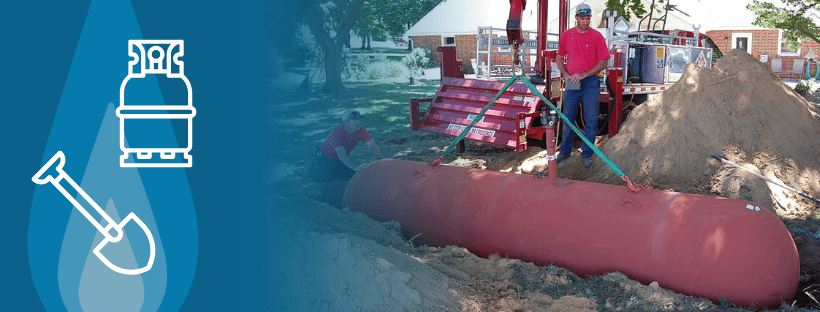
Pick your installation day carefully when installing an underground propane tank. Depending on your tank size, the weather, and space, installation can take several hours to a day on average.
Before the installation can start, the site will have to be assessed so permits can be acquired.
Your propane tank installer will be able to advise on how long the installation will take and what steps they have to take to secure your new tank safely. Be wary of companies that offer fast installations without evidence of customer reviews or a safety plan.
6. Be Flexible About Location
There are some specific requirements for installing an underground propane tank. The company will assess your yard and determine suitable locations for the propane tank that do not impact other home systems.
For example, the tank needs to be installed at least ten feet from a building or the line of an adjoining property. The dome of your underground tank also needs to be in a protected area to remove the risk of gas leaks, such as away from traffic.
It means you have to have a level of flexibility for your propane tank location. You do not need to worry about it impacting the aesthetics of your yard, but it does need to adhere to rules to keep everyone safe.
7. Pick a Reputable Company
An underground propane tank can offer many benefits or quickly become a nightmare. It all depends on the quality of the tank and installation. So, pick a reputable company you can trust for the service.
An inexperienced or unlicensed company could put you in danger and cause costly consequences. An underground propane tank does not come without risks, such as corrosion. So, invest in a company that takes special precautions to keep you safe.
Always check licenses, insurance, and reviews of propane tank installation companies. It can be helpful if you choose a company that offers other services too, such as propane delivery and maintenance. You do not have to keep searching for different companies to meet your needs.
Your propane tank will need to be inspected at least once a year. If you pick an experienced propane installer, you can continue to use their service. They will be familiar with your tank, propane needs, and area, making the service smoother.
Install Your Underground Propane Tank
An underground propane tank offers many benefits, but it is not for everyone. If you have considered these points and feel it is the best tank for you, it is time to take the next step in your propane journey: picking a company.
Kauffman Gas has been helping people with their propane needs for over 75 years. We offer propane tank installation, maintenance, and propane delivery in Chester, Lancaster, Delaware Counties, and Northern Delaware.
Secure Your Home’s Energy Future
Enjoy the safety, aesthetic, and long-term benefits of a professionally installed underground propane tank.
Let our 75 years of experience guide you from planning to installation and reliable delivery.
Become a Kauffman Gas customer today!
FAQs
Is an underground propane tank safe?
Yes. Underground tanks are protected from weather, temperature swings, and tampering. Soil can also help contain leaks.
How long does installation take?
Most underground propane tank installations take several hours to a full day, depending on tank size, weather, and site prep needs.
Can I choose where to bury the tank?
You’ll have some input, but local codes require tanks to be at least 10 feet from structures and property lines.
Is burying a propane tank more expensive?
Upfront costs are higher due to excavation, but underground tanks often last longer and preserve your property’s appearance.
What size tank can be buried?
Typically, 500 to 1,500-gallon tanks are used for underground installation.
Your installer will help determine what’s right for your home.
Do I need a permit to bury a propane tank?
Yes. A site assessment and permit approval are required before installation can begin.